Last updated 05-01-2026

Photo taken 3-16-2015 during visit from my daughter with her husband.
See https://lawrenceboothby.com/cv/ for Education and work
Personal:
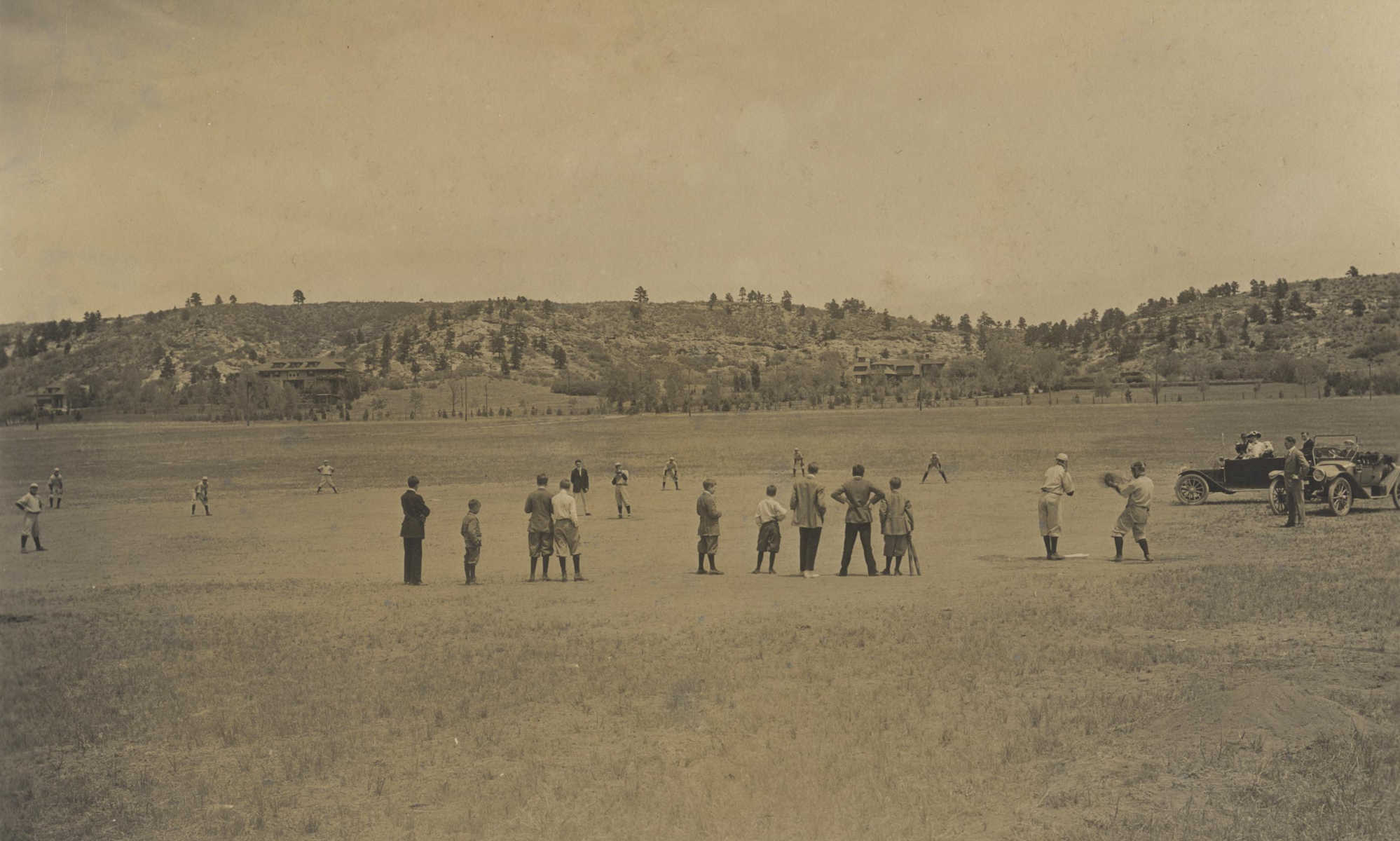
I experienced my paternal grandfather, Ralph Edwin Boothby (1890-1964) as remote during my childhood. His mother-in-law moving into his household to attend my father’s birth, who had been conceived on his parents’ honeymoon, a summer long horseback trip from Colorado Springs, CO to Santa Fe, NM, the second summer trip he had led for students of the prep school he directed.
My cousins and I and our respective parents spent the summers with these grandparents in Vermont and ate our meals together for the first ten years of my life. Whenever an interesting conversation got started around our meal table, our grandmother would interrupt it by passing a juicy platter of meat that no one had requested and which required full attention to avoid spilling. Ralph would retire to his study immediately after the meal.
Here I only want to celebrate Ralph’s indirect influence through my father who attended his father’s school. When this grandmother finally died in 1993 at the age of 104, with her husband and two of her three children predeceasing her, I received three generations of family letters and was able to locate and interview three college women friends of my father’s, one of whom knew the story of my unintended conception.
Ralph was prominence in the early history of Progressive education which resulted in many of my prep school teachers having known him as well as my being a faculty child from ages 3-6 in a prep school, Putney,founded in 1935 whose founder he had known since the 1920s when his Harvard classmate, Perry Dunlap Smith, hired her to teach at his North Shore Country Day School that he had founded in 1919.
In a 1929 address to the parents that hired Ralph E. Boothby to found Metairie Park Country Day School he said about his educational philosophy:
“Study of the individual child, and effort to satisfy his or her needs; Freedom to develop naturally, which does not mean license to invade other people’s rights; Attention to play and physical development for every child; The utilization of children’s interests for educational ends; A large place for beauty in nature, in art, in music; Friendly relationship between pupils and teachers, with teachers functioning as guides rather than taskmasters; Such cooperation between school and home as will make the two, supplementing each other, provide for the whole development of the child.”
Nowhere in that statement does he mention the advantage of establishing professional networks by attending elite colleges. Yet in letters with my father when he was choosing a college for himself, he expresses his disappointment that my father chose Dartmouth instead of Harvard and ends with “at least you will let your son attend Harvard.”
My most notable characteristic is finding intrinsic satisfaction in learning whatever attracts my interests. Initially this was science because my father taught science and I spent time after my own school day helping him set up labs for his students. When my grandfather was head of the education department of Antioch College starting in 1922, pioneer aviator, Orville Wright, was a trustee of that college, which probably explains my father’s childhood interest in building model airplanes and later my own. This photograph is of me in 8th grade after winning 2nd prize in the tri-city science fair for the airplane I had designed late in 7th grade and built during 8th grade. It was judged on its structural design as I did not yet have an engine for it and could not afford to build the radio control for it before my interests turned to designing and building homes.

I built my first summer home in 1962 when I was 16 on my father’s undeveloped 100 acres bordering the Green Mountain National Forest at location 3. It had bottled propane stove, oven, and a propane light. It had gravity feed water from a spring higher above.

My father’s brother, Norman, owned 93 acres he bought in 1944 at location 2 which my father loaned him approximately half the money for. When Norman’s wife received an inheritance, they repaid my father who then bought his adjoining 100 acres. Norman’s 93 acres had a smaller brook with beaver pond and frontage on the back of the lake.
My father’s sister had a summer home on 32 acres at location 5 which also had a beaver pond.
My father’s parents had first bought a home at location 1 in 1926. My father first built at location 4 because there was no electricity available for his 100 acres. He eventually inherited 20 acres around that summer house and deeded me 2.43 below his summer house at location 6 in 1970.
My uncle had wanted to create an artists’ colony and my father a writers’ retreat. The inspiration was probably field trips in the 1940’s to the Quaker communities of Celo (1200 acres founded by Arthur E. Morgan, first president of the Progressive Education Association who had hired my grandfather in 1922 to chair Antioch College’s teacher education program) and The Macedonia Cooperative Community founded by Dr. Morris R. Mitchell in Clarksville, Georgia on 1000 acres).
In the summer of 1964, my first girlfriend, met on a blind date in college, took me to 3 days of the Newport Jazz Festival. She was the first American born generation of her Italian parents. I did not have a car so hitch-hiking to her different state also brought me into contact with people unlike my parents and teachers. By sophomore year I transferred to Reed College to major in psych. The social sciences continue to be an interest in my retirement.

Growing up in Vermont, I had no knowledge of my grandfather’s involvement in Black education, but when his wife died in 1993 at the age of 104, the following picture was discovered by my cousin, Deborah Boothby, and she had a copy of this photo made for me which I have since captioned.

I spent two years researching who these people might be by reading books written by faculty of Dillard in that period. I believe that this photo is commemorating Ralph’s first appointment as a trustee of Dillard University, 1944-1960. Edith Rosenwald Stern recruited my grandfather, Ralph, to found and direct Metairie Park Country Day School, a k-12 coed progressive day school in 1929 because at that time existing white private schools in New Orleans did not admit Jewish students. Ralph was chairman of Dillard’s education committee, likely from its founding in 1935 once MPCDS was up and running. Not surprisingly, Julius Rosenwald Fund fellowship recipients are well represented in this photo: Johnson (1930); Frazier (1944), Dent, first Black president of Dillard and his wife (both 1933), a teacher not in photo, L.D. Reddick (1939, 1945), and the first two deans of Dillard, Julian Bond’s father, Horace Mann Bond (1931, 32) and his uncle, J. Max Bond (1931, 32, and 1934). A full list of Rosenwald fund fellowships is available from this link:
My first photo help was in Horace Mann Bond’s memoir:

From left to right: Langston Hughes, Charles S. Johnson, E. Franklin Frazier, Rudolph Fisher, and Hubert T. Delany, on the roof of 580 St. Nicholas Avenue, Harlem, on the occasion of a party in Hughes’ honor, 1924. Schomburg Center for Research in Black Culture, Photographs and Prints Division, New York Public Library.
More recently a good deal of new information is available on line. For instance this 1938 letter from my grandfather to Horace Mann Bond, then at Fisk University. Charles S. Johnson was not a trustee of Dillard, but he was the founder of Fisk’s sociology department and the first Fisk Black president as well as director of race relations at the Rosenwald Fund.

Here is a full CV for Ralph E. Boothby:

Ralph’s parents were of very modest means. He was accepted by Harvard for 1907, but had to work a year and finally received a scholarship before he could start attending. from a descendant of this Medford, MA business, who by coincidence, had at some time attended the same public high school. The main market for this rum was not New England, but Africa, where it was traded for slaves to work sugar cane plantations in the Caribbean, whose molasses provided the feed stock for making the rum in Medford. This is an example of the triangular trade and of avoiding technology transfer (distillation) to protect a monopoly. That family funded the building of a hospital in Medford and a building for Harvard. This is one illustration of ways that the north profited from slavery taking place somewhere else.

All his professional opportunities came as a result of a Harvard alumni, or Harvard consultant of the employer. As a educator, he tried to acquaint well to do students with how the rest of the world lives. In the mid 1940’s he took students on field trips to the two Quaker intentional communities of 1200 acre Celo (founded by Arthur E. Morgan, president of Antioch College and first president of the Progressive Education Association), the 1000 acre Macedonia Cooperative Community (founded by Dr. Morris R. Mitchell) (see this thesis on Dr. Mitchell: the-turning-of-ones-soul I spent the Christmases of 1960, 1961, and 1962 with the Mitchell family. In 1960 we flew to Puerto Rico to study; in 1961 I was employed as a chainsaw operator in a selective cutting of pulp wood at the former Macedonia Cooperative Community which had reverted to Mitchell ownership; in 1962 I utilized the Putney Graduate School’s library to study historical intentional communities), some labor strikes, and the Highlander Folk School founded by Myles Horton.

Standing are Martin Luther King, Jr., Pete Seeger, Charis Horton, Rosa Parks, and Ralph Abernathy. Pete Seeger’s nephew Tony, and Charis were classmates of mine at Putney. Rosa Parks attended a workshop at this school before starting the Montgomery Bus Boycott. The two intentional communities were likely the inspiration for my uncle Norman Boothby buying his 93 acres in Weston. My father, the eldest, was the last to marry and in 1944 loaned his brother half the money for that purchase. When Norman’s first wife got an inheritance, they paid my father back and he bought the adjoining 100 acres. I spent my early summers with my father and uncle and my cousin Deborah as our father’s mowed their fields and we picked berries with my mother’s sister who came each summer to care for us and later take us swimming daily.
Here I would like to insert three pages from Donald B. Watts, Intelligence Is Not Enough, 1967. First, Chapter 13, pages 107-108 in which Mr. Watt credits headmasters Ralph E. Boothby, Perry Dunlap Smith , and Hans Ftoelicher, for providing the majority of the students for the early exchange trips of the Experiment in Internatonal Living which later did the language training for the Peace Corps. Perry Dunlap Smith graduated from Harvard in 1911 which would have been Ralph’s class if he hadn’t hadn’t had to wait a year from acceptance in 1907 to earn money and a scholarship. Perry had two brother’s at Harvard including Lawrence Dunlap Smith, Harvard 1912, for which my father may have been named. Mrs. Hinton was on the Experiment’s second Germany trip in 1933. One of Perry’s daughters attended Mrs. Hinton’s daycare. When Mr. Hinton committed suicide, Perry hired Mrs.Hinton to teach at his North Shore Country Day School.


Mrs.Hinton was selected to lead the third Germany exchange trip.


NOTE for Lisa Ree Anfield: as I am currently reading Donald Watt’s memoir, I just noticed, that like MIles Horton who founded the Highlander Folk School which Rosa Parks attended just prior to starting the Montgomery Bus Boycott, and others involved with founding , Dillard University in 1935 that my grandfather worked with, many of these leaders originally trained to be Christian ministers in the 1930s, 1940s, and 1950s. This is no longer the case. I am sure that you will be a very good parent, in spite of being a Christian, not because I think Christianity has healthy ideas about child development.
Donald Watt selected Putney for the Experiment in International Living because his son was enrolled at the Putney school. My father attended the 1935 Christmas party held at the Putney School lower farm and wrote his father about it in a letter I now have. Mrs. Hinton wanted him to join the 1936 Putney Summer Work Camp. Ralph Boothby was opposed because he was counting on Larry to install the slate roof on the Teepee.
Some what later, Donald Watt tried to recruit Ralph to lead an Experiment trip to Guatemala. His mother-in-law vetoed this idea. as she would later veto Ralph’s interest in directing the Fieldston Ethical Culture School in 1938 when his Harvard classmate, Herbert Smith offered him the position when he became instead, the director of the Francis W. Parker School. My father left Dartmouth after his third year to visit his roommate’s parents’ mission in Fort Yukon Alaska. Larry had planned to go to Guatemala following that adventure in Alaska. He had wanted to be a writer. His Dartmouth creative writing showed promise. Unfortunately, his father talked him into canceling that trip to Alaska, so he enrolled at Reed College for his senior year. Larry always regretted canceling his Alaska plans. He climbed so many North West peaks, including 14,411-footvMt. Rainier in the winter, that he didn’t complete his thesis that year. I grew up with this picture sitting on one of the matching twin pecan dressers in our summer one bedroom cabin in Weston.

Then Ralph needed a science teacher which delayed Larry’s return to Reed, pushing his graduation to December 1941. The Japanese bombed Pearl Harbor. First Larry took a course under Reed class of 1936 alumnus, Howard Vollum (who later founded Tektronix). These classes were under the National Youth Administration. Then, while waiting to be drafted, he accepted a technical writing job at the Naval Research Lab in Washington , D.C. Larry’s passions were the outdoors, social sciences, and writing. He had the misfortune of earning 4 individual and one shared patent on radar. He would be hired to teach biology, and then be asked to teach physics for which he had neither the interest nor the math background.

Once at the Naval Research Lab, Larry joined two other engineers already boarding at the Alexandria, Virginia residence of Mrs. C. L.Holmes. Her twin daughters were off at college. Her husband had died in 1938 leaving a new mortgage to pay. Her husband had a PhD and had last been employed in the Department Agriculture, sub department of Agricultural Adjustment under both Presidents Hoover and FDR. With his death, Mrs. Holmes had to lay off her colored housekeeper and take in boarders. Here is a picture of my father before or directly after my conception. Graduating from Oberlin College with honors and planning to teach, she had instead home schooled her son and twin daughters. Having been out of the workforce all those years, she was very eager for one of her daughters to marry one of these three engineers.
I was able to locate and interview one of Larry’s Reed College friends that he had mentioned in a letter to his father that I received from his mother’s estate on 1993 when these letters were discovered. She related that Larry had invited her and another Reed woman to a tea. They were supposed to make it clear that Larry was not available for Frances. Then Larry’s father needed an art teacher at his school in New Orleans. Larry recommended Francie. The following spring, Ralph did not renew Francie’s teaching contract. At that same time Larry had a dental emergency and went to New Orleans to use the family dentist. That place Larry and Francie on the same train headed north. I was conceived on that train ride north. I think my mother intended that result and either was unclear about her cycle or misled my father. She did not want to return to her mother’s home unemployed, she was angry that my grandfather had not extended her teaching contract. My father developed a massive stomach ulcer. I believe that they were both virgins, in my father’s case, based on some short stories he wrote at Dartmouth, and that in attending his father’s school, he didn’t have the privacy and independence to explore a sexual relationship during high school. Part of his attachment to his acreage in Weston, was that Dartmouth was the first time he had lived away from home and he and his college friends had made use of his parents’ summer home as a base camp for hiking and skiing.

I was a 3 month old fetus when my parents married. Ralph boycotted his sons’ wedding. He had not hired my mother for a second year of teaching – he certainly did not want her as a daughter-in-law.


I think this explains his distance towards me as I was evidence of my father’s downfall. My mother had been home schooled. She did not have good social skills, was unsuitable as a faculty or headmaster’s wife. Having majored in home economics, she insisted that we live off campus at Putney and eat at home. Then she insisted on having a second child, then that my father get a higher paying job. We left the Putney School and we rented a farm house in Cazenovia , New York for a year while my father worked at the GE plant in Schenectady, NY. This was a long commute so my father left for work before I woke and returned from work after I was asleep. My mother preferred to sew for her sons than to play with us. Once when my little brother cried, she beat me quite savagely for not keeping him content and interrupting her sewing. I could hardly wait to get on the school bus for school each week day.
I did not learn of my accidental conception until I was 18. My mother told me in anger when I didn’t include her when my first girlfriend was visiting me at my first cabin. I was embarrassed by my mother’s drinking. There was no risk of my girlfriend getting pregnant because she was Catholic, so given her values we were not sexually touching since that was her right to decide. As an example of my mother’s inappropriate boundaries, she had told my younger brother, Chris, before me that I was an accidental conception. She had required my brother Chris to take naps with her well into his early teens after my parents had separated. Chris should have been out playing with his friends. She also insisted in using the bathroom when he was taking a bath. See poisoned my brother’s unrealized relationship as a father by tkaking Chis to check and document my father’s visiting his girlfriend. This is in the context that our mother had had an affair with a married man and had then spent a year living with her mother in Madison, Wisconsin. My father’s sister had taken my mother to the airport to leave my father. From my perspective, my father had every right to seek a partner. He mentored that partners daughter who was in my class at Reed, but had started as a freshman while i had transferred in as a sophomore. It did not occur to me to wonder at the time if my father was contributing to her support and education. He had taught her to drive. We drove out to Reed together in Larry’s ’61 VW bug. Our first stop was a night visiting my mother’s mother in Madison. Next was the Bad Lands National Park to wait for the sun to rise. Next stop was a night at Yellowstone National Park. Then on to Portland where Ellen had arranged for us both to stay with the parents of a Reed classmate from Ellen’s freshman year. They took us on a picnic to Mt. Hood. I was able to find a $10/month glassed in porch the upper end of the Reed canyon. The only class I had with Ellen was our full year economics class.
In December 1972 I met my middle partner, Maryann D. She worked for a book publisher and was returning a book she had borrowed from a co-employee that was renting a room in a house that I was upgrading for the owner. She was intrigued by my design and construction skills. She was dating a Stanford student that she found boring. Many years later in 1993, I discovered s Reed music program in which her father was a cellist and my father sang. We had not known that they had met. Her father found Reed too secular and left Reed for Oregon State. Here Maryann is in Switzerland before I met her.

Our parking area for new house on Tualatin River.

Our relationship was good in different ways for each of us. Maryann was also my same age then of 26, but she had never lived away from her parents before and her mother expected both her daughters to never leave home. She had graduated from Lewis and Clark College. in English. She was interested in film which her parent’s religion ( Apostolic) prohibited. I was experienced in relationships, but my education had been blocked by Francie telling my first two colleges that I didn’t need a scholarship. We both grew. There was a rental on the Tualatin River outside Portland on 8 acres belonging to an elderly retired dean of Mills College and retired director of the upper division of the Catlin Gabel School. She had an adult daughter that had graduated from the Putney School in 1950 when I had been a faculty child.

Her main house was designed by architect Pietro Belluschi. Her late husband had built an accessory building nearby which rented out for $85/month.

I had first seen this rental in May 1970 when it was rented by a couple I had shared housing with in the fall of 1966. Ester had promised that she would sell to them when she could no longer live in her own home. Here the family is after they gave up waiting and bought a different property. When later the landowner’s adult son was unable to finance the purchase of his mother’s estate, and did not offer to split it with me, this couple bought the entire property. I had first met Elaine in January 1965. We were never partners. I drove her to a couple in Palo Alto, CA that were friends of her parents before her parents separated. Later I would visit her father who had homesteaded in BC on Lake Ootsa after WW II and drove a dump truck and front loader working for a retired neighbor from Oregon. They would buy Ester D. Strong’s entire property with my house on it after Curtis Strong failed to finance buying it. While I got no compensation other than the 5 years of free land rent living in the house I had constructed at my own expense, at least friends benefited from my work.

Esther D.. Strong needed a caretaker if she was going to be able to continue to live in her own home. The rental we wanted was currently rented to the daughter of the then current director of Catlin Gabel, who was a Putney alumnus. I proposed that we build a new house at our own expense and that Mrs. Strong would sell us some land under it when she had to move closer to a hospital. She estimated that this would be 5 years, Her two adult children did not at that time have an interest in her property.

My first proposed design with loft lighted by clerestory and view from the loft down the steep bank to the river. This design was abandoned for cost reasons. My final design cost $4,000 for materials including gravel for the driveway. Plus the opportunity cost of over a year of unpaid labor to dig a 3′ deep trench for water and under ground, power and telephone, build the road, and to build the house. The clear vertical grain cedar siding and oak flooring were bought used, all the other materials were new. Economically this arrangement favored the landowner. However, in the process of designing and building, I taught myself skills and was able to enter the carpenter’s union without apprenticeship. Subsequent construction work paid for my degree in civil engineering, which in graduate school led to my career as a computer programmer.


I built a one bedroom house. However, to partition the 8 acres required a variance to the agricultural zoning and that was granted two years after my written agreement expired. During those two years I was paying $85/month for the land rent under the house I had built at my own expense. Unfortunately, at that time her adult son, Curtis, retired from the State Department, was divorced by his first wife, and was dating a Portland woman. Alcohol seemed to be involved. He decided he wanted to buy his mother’s entire estate. I had already sold my land in Weston in anticipation of buying the land under the new house I had built. Maryann and I had separated amicably two years earlier. Once she had completed her MAT and started teaching, her social needs were entirely met by her junior high students and she was coaching drama and speech that required her to be away some weekends. I was used, both from my first relationship, and from the beginning of our relationship to more time together.

The window at the desk was to become a door to the deck and the bed was in the dining area while we spackled the bedroom sheet rock.


Skylight over couch.


While Maryann was earning her MAT in English, we had a lot to share because i did the sane reading. However, once she started teaching, her social needs were met by her students and she was coaching drama and speech and sometime gone on weekends for out of town speech tournaments. We separated amicable at my initiative and it was two years before my next relationship while I I was in graduate school..
I did not know the history of my grandfather’s involvement in Black education, later in April 1979 when I met my last partner in graduate school.

Alice invited me for dinner and then to spend the night. The next day she showed me their section 8 eviction notice. Her landlord was actually her cousin. I couldn’t see them living in their disabled Buick, so I sold my ’59 Karmann Ghia and she picked the near end apartment of the triplex below.

Alice had a 2 year old daughter. They invited me for dinner at their section 8 rental. The following morning, I learned that they had received an eviction notice. Perhaps the dinner invitation had a lot do with my having a VW bus that would be helpful for moving. The two year old was very verbal and observant. She commented on my making one huge pancake and dividing it, whereas her mother would have cooked three smaller pancakes. I wondered if my grandfather’s ideas about education were suitable to raising a Black child. Her mother and I were both single at that time. Like my grandfather moving to New Orleans in 1929, I sensed a learning opportunity and joined this extended family that initially included 5 living maternal generations with one 103 year old woman, the first generation born after emancipation.

This worked very well for parenting the two years Lisa was in Head Start which was a short walk from here. There was a slightly older child living with her aunt at the north (far) end of the triplex. Pepper came over as soon as Lisa got home each day from Head Start. The year Lisa started kindergarten, Alice had started renting again from the cousin that had evicted her just before I met her. This was a small detached home just around the corner. It was more attractive, but we could not see the apartment of Lisa’s friend back at the former triplex, so this was not as good for parenting because neither child was old enough to walk safely between these two residences. In addition the public school kindergarten was not close enough to walk to so I was driving Lisa to and from school instead of walking with her which is a better transition from home to school and back after school.
Our first Christmas.Lisa is 2, we are celebrating at her maternal grandmother’s. I was up all night creating this doll house which resembles my paternal grandparents’ summer home back in Vermont.


Alice was mentored by Dr. William A. Little of Portland State University’s Black Studies Program which published this anthology. https://ncbsonline.org/in-memoriam/william-a-little/ She was also mentored by her English teacher who sent some of her poems to Mary Helen Washington who shared them with Alice Walker. Soon we received Miss Walker’s latest book of that time.

Zora Neal Hurston received a Rosenwald Fund fellowship in 1934 to support her anthropological studies at Columbia University and her field research. I learned this before I learned about my grandfather’s involvement with Black Education in the founding of Dillard University in 1935 for which he chaired the education committee and was appointed a trustee 1944-1960, that is 4 years beyond his retirement in 1956 from Metairie Park County Day School which Julius Rosenwald’s daughter, Edith Rosenwald Stern had recruited my grandfather to move to New Orleans to found in 1929 because Jewish kids were not allowed to attend other white private schools there yet.


From age 2, Lisa built things with me, initially with Lego blocks. Lisa visited job sites where I was building as well as the house I bought for us in 1980 that required extensive work.


Alice is telling us a funny story.

Christmas tree often still up when you have an early January birthday!

Sabin School dance performance.

My alcoholic mother showed up in 1982 uninvited. I intentionally hadn’t seen her since my father’s death in 1976. My mother had a history of trying to insert herself between me and my partners. She may have encouraged my partner to date other men. When my partner, Alice, announced that she had a dinner date with a fellow that she didn’t plan to tell about her relationship to me, I made it clear that that would end our relationship, and indeed, I moved out an hour before she left on this date. I do not know if she actually had a date, or if she went on this date. I sold my antique Martin D-28 guitar for pennies on the dollar to pay Alice’s gas bill, because I had only just learned of it and didn’t want Lisa to be without heat. The next picture is several years later (August 1984) after I moved out, but continued my parenting role. Note the moat and draw bridges to make the residents of this castle safe.


I had gotten Lisa a keyboard the previous Christmas. Her uncle Kenny Adair got her a real piano. I enjoyed taking Lisa to her weekly piano lessons until Alice married her last husband in the summer of 1991.

The next photo is 02-12-1990. Alice had married and then annulled that marriage to a Christian in the spring of 1985 with a fondness for powered cocaine who beat her. In September he was in drug treatment with a restraining order and her father and I helped them move first to her older sister’s rental and then later to her mother’s house pictured here. This is a typical after school day when I picked Lisa up at Sabin and we did something outside before I cooked her dinner. By intention, this gave Lisa a central home, and I, rather than she divided my time between two homes. This was not a good situation for me, but I was committed to seeing Lisa into successful adulthood. Alice got Lisa to school mornings and dated after work while I picked Lisa up after school and cooked Lisa dinner at her grandmothers and did the dishes.

We celebrated all family holidays together. This next photo is my birthday on 02-24-1990 and Lisa and I are playing bridge against Elise and her mother Bessie at Bessie’s home. Elise has not married yet. Bessie treated me like a son, said I, a third generation atheist, behaved more like a Christian than many Christians she knew. Her own son was a heroin addict, later graduated to crack cocaine. After stabbing his girlfriend, diversion to and later release from rehab, he boasted that he had had sex with more women than Wilt chamberlain.

Lisa graduated from St. Mary’s Academy in 1995 and was class valedictorian.

Lisa graduated from Stanford University in 1999 in English and earned a Master of Teaching Arts from Ohio State University in 2000. Then she taught English and creative writing for 7 years. But her real passion was singing and theater. She had the lead female role in Stanford’s performance of the play, Chess, and earlier in April 1997, her a cappella group had competed at NYC’s Carnegie Hall and won the 1997 National Championships of A Cappella. To create more time for her music interests, she earned a second master degree from Kent in Library and Information Science in 2008 and is now a librarian with no papers to read and comment on after work, so has time to perform in multiple musicals in Nashville, TN each year. Her mother had married again in 1991, disrupting my parenting yet again,


Carnegie Hall, accepting the April 26, 1997 National Championship of College A Cappella award

When Alice remarried in the summer of 1991, I considered setting her up as an emancipated minor, perhaps continuing to live with her mother and new stepdad, but so that she would have more power for advocating for herself. I was not in favor of their sending her to a single sex Catholic school. I hoped to have more influence during her college years away from home.

However, what I heard was that she was stressed by the cognitive dissonance between her mother’s and new step dad’s religious values and my progressive secular values.

When she was finally ready to resume contact, she talked about how teaching public high school with disruptive students was stressful and didn’t allow her time for her passion for performing musicals in community theater. She decide on a career change and earned a second master degree in Library Science and Information technology from Kent State in 2008.

After graduating in 2008, she went to visit her mother in Jamaica and returned with a husband. He had been working as a counselor in a Christian teen abstinence only NGO funded by USAID.
Here she is, 8-22-2023:

Lisa is a good person in spite of being a Christian. I retrieved the signed book by Alice Walker once from a box of stuff her grandmother wanted me to take to Goodwill. I saved it for Lisa. Perhaps at the time in 2008 when I paid Lisa’s outstanding education loans for Stanford and her second master degree, I gave Lisa this book by Alice Walker. I wish now that I had kept it for myself, because Lisa discarded it. I think Alice Walker was incompatible with her religious beliefs.
As a Christian, she is obligated to give 10% of her income to her church. For that reason, I am passing half of my financial estate to endow our public library back in Portland to celebrate both our many library trips when she was young and that she has chosen to serve as a librarian as her professional career. Given the maternal side of her family, this seems like the choice she had to make and that she is well adjusted with that choice. I am sad that she is not in Portland directing her own non-profit theater group which she would have the means for as soon as I am deceased, or sooner had she settled in more secular Portland. Theater is something that I could have gotten excited about while I was still alive. My own grandfather converted a church into a summer playhouse in 1935 and in 1963 I was employed rebuilding this playhouse after its fire in 1962. I am sad also that Alice abandoned her writing career when she earned no royalties for the anthology of poetry she worked on including her own poetry. In 1979 when I first met her, she believed that she had Lupus. Whether this was a false negative from OHSU, or a delusion, or a way to motivate my concern, I will never know, but I bought the house in 1980 for us because I expected to need to care for her when her Lupus became disabling. The whole redesign of this house was so that she would have a room to write in and I paid it off in 1985 and started saving for Lisa’s college because I believed this needed to be completed before Alice became disabled and died in her 40s or 50s.
Lisa with husband, Arvind, and adopted daughter, January 09, 2025. I like that they decided to adopt. All children are born deserving, but not all children are born to parents that intended to have them or are able to be good parents.

I first met Linda’s mother, Evelyn (60), in July 2012 when she randomly knocked on my door to solicit a donation to her non-profit. It turned out that her daughter, Linda (32), and granddaughter, Noa (6), were renting from my Putney School classmate, Seth Rockwell.


I believe that confidence is a product of skills and the cumulative experience of success. There is a lot that you don’t have to put up with when you have skills – including parents that are not getting along with each other.

Noa’s social skills were very good. Here she is at her home with a friend visiting.


Noa and Gabe dug connected tunnels.

Our second trip to the Sandy River together, this time hiking down from the east side of the river. Noa wanted a bikini. Linda was hesitant, but she had just posted a picture to FB of swimming at a Portland Park pool and most of the women, and I think they were all women, including a very pregnant women, were wearing bikinis. I thought it was important and healthy for Noa to want one too. It had nothing to do with boys at this stage.

I am marking the beginning of water deep enough to swing out over and let go.

Noa likes to climb trees. We were hiking in Washington park with her grandmother. We took the MAX to the tunnel exit for the elevator up to the zoo above, and then across to NE Burnside and home again by bus.

Another tree climbing day, Noa shows me her favorite tree in Irving Park. It is the day I helped her father move out. Her parents needed time to discuss some details, so her grandmother and I headed to the park.


Then we headed to my house to cook a cinnamon raisin pancake. Quite a few raisins ended up on the floor while being snacked on while the pancake was cooking indicating some stress that was not evident while we were climbing that tree which her grandmother photographed.


One way to deal with a fear of heights is to reframe heights as an opportunity to sky dive.

October 2023, Linda took me in for bilateral inguinal hernia surgery. A few hours later she brought me back to my home from surgery to recover.

During my early childhood summers, my oldest cousin, Linda Bratton, led our generation in play production. I remember mainly sewing costumes and making a set in the barn with the workbench and tools. I don’t remember practicing lines or performing until later at the Emma Willard Day School, where, as the only boy in 3rd grade, I had all the male leadership and actingroles.

Linda paints. She posted this to her FB, 3-11-2026

July 03, 2025, first day with my new 8 week old chocolate orpington to keep my older golden laced wyandotte hen company. after her older companion had died.

I have had chickens since 2017. They have been very good company during the pandemic when I have been isolating and have successfully avoided covid-19 so far.
It is always a challenge to introduce a new chicken to an existing flock. Dorothy (golden laced) Wyandotte , a little over one year old, was willing to share their laying nest before sharing HER night time roost above the bathroom sink. It was much easier to shower once this happened and Coco Chocolate Orpington was no longer perching on a pipe above my shower. Finally they are best friends and stick together looking for bugs and veggies in their outdoor free ranging area.

Linda is currently a second year medical student at OHSU. Noa applied to, and was accepted by, Reed College, Stanford University, Howard, and Spelman. Her first choice was Spelman which seems a good choice for her first experience of living away from home.